High-Tensile & Electric Fence in Springfield, MO
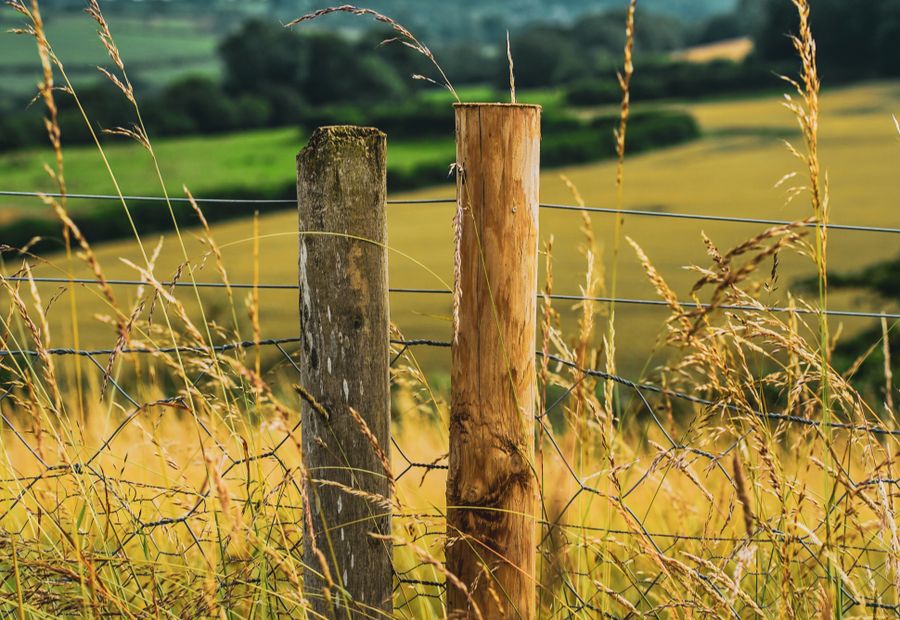
Springfield Farm Fence builds high tensile smooth wire fence and electric fence for rotational grazing, cow-calf pasture, and horse paddocks around Springfield, Rogersville, Marshfield, Bolivar, and Ash Grove. We install permanent multi-strand fence, interior cross fencing, and the energizers and grounding behind it across Greene, Christian, Webster, Polk, and Dallas counties, Missouri.
Twelve and a half gauge high tensile wire holds well over a thousand pounds before it begins to stretch, and that number is the whole design. We hang Gallagher and Speedrite energizers sized to the miles of wire and the weeds on the place, run in-line ratchet strainers on every strand, and set tension springs where a fence line changes grade. Class 3 coating goes on the wire. Insulators are rated for the voltage, not the cheapest tube in the box. Ends and corners get double H-braces on CCA ground contact posts, because pulling six or eight strands to full tension against a single post will lever it out of Ozark ground in a season. The fence people compare it to is soft wire strung by hand and clipped to steel posts, which sags the first hot week and never comes back.
Rock Under the Grazing Cells
High tensile suits this country because the wide post spacing means fewer holes, and every hole here is a rock hole. Fewer posts drilled through cherty limestone is real money saved on a mile of cross fence. It also concentrates the load, so the posts we do set get drilled to full depth with a rock bit and braced back into the line. Grounding needs the same attention: dry chert is a poor conductor, and a ground field that works in April can fall off in an August drought.
Wire Spacing by Animal
Cattle hold behind five strands, with the bottom wire high enough that calves can crawl under to their mothers if that is how you run. Horses take a taller fence with a visible top rail or sight wire, since smooth wire alone is hard for a horse to see. Sheep and goats need more strands, spaced tight low, with alternating hot and ground wires so a wool coat still delivers a shock. We set the strand plan around the animals on the place today and leave room to add a wire later.
Season and Quotes
We build spring through fall and quote in any month. Winter is a good time to plan grazing cells, because you can see the ground and the water lines without standing grass in the way. Call (417) 612-8231 to walk your place. Cross fencing usually ties into a perimeter fence built to a heavier spec.
How many ground rods does an electric fence need?
More than most fences have. A weak fence is usually a grounding problem, not an energizer problem. Plan on three six foot galvanized rods for a mid size energizer, driven at least ten feet apart and away from any building ground or water line. Around Springfield the rods often hit limestone before full depth, so we run them at an angle or add rods in a trench instead of forcing one deep hole. Then we test the ground field with a fault finder rather than guessing.
How far apart do posts go on a high tensile fence?
Farther than on woven wire, and that is most of the savings. Line posts run twenty to thirty feet apart with fiberglass or plastic droppers between them to hold spacing. The wire carries itself between posts once it is at tension. What that spacing costs you is end assemblies: every corner and end takes the pull of every strand at once, so they get built heavy and braced long.
How tight should high tensile wire be?
Tight is a number here, not a feel. Twelve and a half gauge high tensile wire gets pulled to a set tension with a ratchet strainer, and a heavy duty tension spring on the line shows where it sits at a glance. Wire tightens in cold weather and slackens in heat, so the reading moves through the year. When it drops in year three you take a few turns on the strainer instead of restretching the fence.
Is electric fence enough to hold cattle?
For most cow-calf herds on good pasture, yes, once the animals are trained to it. Cattle learn a hot wire in a day or two and then respect it. Where we would not rely on it alone is a boundary along a highway, a bull pen, or a lot where stock get crowded and pushed. Those get a physical fence, with electric added on the inside to keep animals off the wire.